
Blog
How to Select the Right Floor Care Equipment for Your Facility
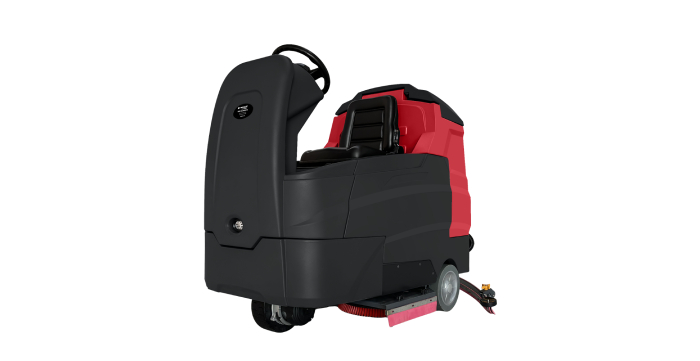
Choosing the right floor care equipment comes down to matching the machine to your facility: its size and layout, the type of floor, the kind of debris you deal with, how often you clean and your budget over the long run. Get those five factors right and you cut labour, improve safety and protect your floors for years. This guide walks through each one, the way our team at Hotsy Water Blast helps facilities across Western Canada do it every day.
What Is Industrial Floor Care Equipment?
Industrial floor care equipment, sometimes called industrial floor cleaning equipment, is the range of powered machines used to clean, maintain and protect hard floors in commercial and industrial spaces. The two workhorses are floor sweepers, which collect dust, dirt and debris, and floor scrubbers, which wash and dry sealed floors in a single pass. Both come in walk-behind and ride-on formats, and together these commercial floor cleaning machines replace the slow, inconsistent results of mops, brooms and push sweepers. Larger operations may also add burnishers for polishing and combination sweeper-scrubbers that handle both jobs in one pass.
Floor Sweeper vs Floor Scrubber
|
Feature |
Floor Sweeper |
Floor Scrubber |
|
Removes dust and debris |
Yes |
Limited |
|
Cleans liquid spills |
No |
Yes |
|
Washes floors |
No |
Yes |
|
Leaves floor dry |
No |
Yes |
|
Best for warehouses |
Yes |
Yes |
|
Best for grease removal |
No |
Yes |
Why Selecting the Right Equipment Matters
A machine that fits your facility pays for itself – one that does not become a maintenance headache that sits in a corner gathering dust. Three benefits stand out when the match is right.
A Drastic Reduction in Labour Costs
Manual cleaning is slow, and labour is your biggest ongoing cost. A properly sized scrubber or sweeper covers far more square footage per hour than a crew with mops and brooms, freeing staff for higher-value work and shrinking the hours spent on floors every week. Over a year, those reclaimed hours add up to real savings.
Enhanced Safety and Slip Resistance
Wet mopping leaves floors damp and slick, a leading cause of slip-and-fall incidents. A scrubber lays down cleaning solution and vacuums it back up in one pass, so floors are clean and dry within minutes. Sweepers pull up grit and dust that cause slips and wear. Cleaner, drier floors mean fewer incidents for your staff and visitors alike.
Asset Preservation
Your floor is a major capital investment. Ground-in grit acts like sandpaper, dulling finishes and wearing down concrete, tile and epoxy over time. Regular mechanical cleaning lifts that abrasive material before it does damage, extending the life of the floor and delaying costly refinishing or replacement.
How to Choose the Right Floor Care Equipment
With the benefits clear, here is how to narrow the field to the machine that actually fits your operation.
Facility Size and Layout
Square footage and floor plan drive the decision. For smaller spaces with tight aisles, doorways and obstacles, a compact walk-behind scrubber gives you control and manoeuvrability. For large warehouses, distribution centres and manufacturing floors, a ride-on machine covers more ground faster and keeps operators productive over long shifts. For warehouse floor cleaning solutions in particular, runtime and cleaning-path width matter as much as raw size, so a single charge can cover the whole floor. Mapping your space, including racking, choke points and turning room, points you toward the right size before you ever compare models.
Floor Type
Different floors need different handling. Polished concrete, ceramic tile, epoxy coatings and sealed surfaces each respond best to specific brushes and pads. The wrong pad can leave a floor under-cleaned or, worse, damage the finish. Matching brush type, pad grade and pad pressure to your flooring protects the surface and delivers a better clean in fewer passes.
Type of Debris
What you are cleaning up matters as much as where. Dry dust, dirt and loose debris are a job for a sweeper. Liquid spills, grease and oil call for a scrubber, and in heavy-duty settings such as workshops and wash bays, a pressure washer paired with a scrubber tackles built-up grime that a single machine cannot. Many facilities run a sweeper and a scrubber together to handle both ends of the mess, and you can compare options across our floor care machines.
Cleaning Frequency
How often you clean shapes how rugged a machine you need. A floor cleaned once or twice a week can run a lighter-duty unit, while floors cleaned daily, or several times a day in food processing, healthcare and high-traffic retail, need a durable machine with the battery runtime and build quality to keep up. Buying for your real frequency avoids both overspending and premature wear.
Power Source
How a machine is powered affects where and how long you can run it. Battery-powered scrubbers and sweepers are quiet, emission-free and ideal for indoor use in warehouses, retail and healthcare, though they need charging time built into the schedule. Corded electric units suit smaller areas close to power. Engine-driven machines deliver long runtime for large outdoor or industrial spaces, but they are not suited to enclosed areas. Matching the power source to your environment keeps operators safe and productive.
Budget and Return on Investment
Upfront price is only part of the picture. The right machine lowers labour hours, reduces floor wear and cuts the risk of slip incidents, savings that add up month after month. Weigh the purchase against those long-term returns, and factor in service, parts availability and downtime. A slightly larger investment in a well-supported machine often costs less over its life than a cheap unit that is hard to service. Ask any supplier about parts availability and average service turnaround before you sign, because those answers tell you what ownership will really feel like. It also helps to ask for references or case studies from similar facilities, so you can see how a machine performs in conditions like yours before you commit.
Frequently Asked Questions
What is the difference between a floor sweeper and a floor scrubber?
A sweeper collects dry debris like dust and dirt, while a scrubber washes and dries sealed hard floors. Many facilities use both to cover dry and wet messes.
Should I choose a walk-behind or a ride-on machine?
Walk-behind machines suit smaller or obstacle-heavy spaces. Ride-on machines are built for large, open floor areas where speed and operator comfort matter.
What type of floor scrubber is best for a warehouse?
Ride-on floor scrubbers are typically best for warehouses because they cover large floor areas quickly, improve operator productivity and reduce labour costs.
How do I know what size machine I need?
Match the cleaning path width and runtime to your square footage and cleaning frequency. Our team can size a machine to your facility so you are not paying for capacity you will not use.
How long do industrial floor scrubbers last?
With proper maintenance, many industrial floor scrubbers provide 5–10 years or more of reliable service, depending on operating conditions and usage frequency.
Can floor scrubbers clean oil and grease?
Yes. Commercial floor scrubbers can be used with appropriate cleaning solutions and pads to remove oil, grease and other industrial contaminants.
Are battery-powered floor scrubbers better than propane or engine-powered models?
Battery-powered machines are often preferred indoors because they generate no emissions, operate quietly and are safer for enclosed environments.
Cost Justification: Manual Cleaning vs. Mechanized Floor Care
Why Western Canadian Facilities Choose Hotsy Water Blast
Picking the machine is one decision. Picking the partner behind it is another. For over 40 years, Hotsy Water Blast has equipped facilities across Western Canada with cleaning solutions, and we are a Hotsy Certified All-Star Dealer with nine locations serving Alberta, British Columbia and Saskatchewan, from Calgary and Edmonton to Red Deer, Lethbridge, Grande Prairie, Langley and Regina. When a machine needs attention, our mobile service team comes to you, helping minimize downtime and lost productivity. We maintain a large inventory of in-stock parts and accessories, so the component you need is often available immediately rather than requiring a lengthy order process. And if we do not carry exactly what your facility needs, we will build it.
Match the Right Floor Care Equipment to Your Facility
Selecting the right floor care equipment comes down to a handful of questions: How big is the space? What is the floor made of? What are you cleaning up? How often do you clean? How is the machine powered? What is the true cost over time?
Answer those, and the right sweeper or scrubber becomes clear. The goal is not the most machine, it is the right machine, supported by a team that keeps it running. Ready to match a machine to your facility? Request a quote and talk to a Hotsy Water Blast expert who knows Western Canadian facilities or browse our floor care machines to start your shortlist.
For example: A 100,000-square-foot distribution centre in Alberta may benefit from a ride-on floor scrubber with extended battery runtime, allowing operators to clean large floor areas efficiently without frequent charging interruptions.
Which Floor Care Machine Is Right for You?
|
Facility Type |
Recommended Equipment |
|
Retail Store |
Walk-behind scrubber |
|
Warehouse |
Ride-on scrubber |
|
Manufacturing Plant |
Sweeper + scrubber |
|
Food Processing Facility |
Heavy-duty industrial scrubber |
|
Distribution Centre |
Ride-on sweeper-scrubber |
Over four decades of working with warehouses, manufacturing plants, transportation facilities and municipalities across Western Canada has shown us that selecting the correct machine size is often the most important factor influencing long-term cleaning costs.